
Best Elementary Schools in Richmond, BC: What Rankings Don’t Tell You
For many parents in Richmond, school selection often starts with rankings.
At the elementary level, schools like Jessie Wowk Elementary (ranked 58/1015), Spul’u’kwuks Elementary (ranked 63/1015), and Archibald Blair Elementary (ranked 49/1015) are often seen as top choices. These rankings make them easy reference points and gradually shape how families define what a “good school” looks like.
This mindset often carries into elementary school decisions.
When searching “best elementary schools in Richmond”, rankings again become the default guide. It feels like the simplest way to compare options.
However, rankings rarely reflect what daily school life actually looks like for a child, or how manageable it is for a family.
Local data and school district patterns point to a different reality. The factors that most affect a child’s experience and a family’s long-term stress are usually these five:
Whether the program fits the child
How stable the Richmond catchment and school capacity are
How well learning support is actually delivered
Whether the area will face future boundary changes
Whether after school programs and daily logistics are workable
Understanding these matters far more than comparing schools by rank.
| Richmond Rank | School | Score | BC Ranking |
|---|---|---|---|
| 1 | Archibald Blair Elementary | 9.3 | 49/1015 |
| 2 | Jessie Wowk Elementary | 9.2 | 58/1015 |
| 3 | Spul'u'kwuks Elementary | 9.1 | 63/1015 |
| 4 | John T Errington Elementary | 8.2 | 106/1015 |
| 5 | William Bridge Elementary | 8.2 | 106/1015 |
| 6 | Tomekichi Homma Elementary | 8.1 | 122/1015 |
| 7 | Maple Lane Elementary | 8.0 | 128/1015 |
| 8 | James Thompson Elementary | 8.0 | 128/1015 |
| 9 | John G Diefenbaker Elementary | 7.9 | 136/1015 |
| 10 | Samuel Brighouse Elementary | 7.8 | 147/1015 |
The rankings are based on the Fraser Institute’s 2025 BC elementary school report card. While the data can give parents a useful academic reference point, it does not fully reflect classroom environment, teaching style, student support, catchment pressure, commute time, or after-school needs.
Why School Rankings Can Be Misleading
Rankings are not useless, but they are incomplete. Relying on them alone often leads to the wrong decision.
1. They may be outdated
Some widely circulated school ranking lists online may still rely on older Fraser Institute data, including 2020-era results. However, Fraser Institute has since published newer BC elementary school rankings, including its 2024 and 2025 Report Cards. Even with updated rankings, parents should still treat them as one reference point rather than a complete picture of daily school life.
This means they may not reflect:
Recent enrollment growth
Changes in school capacity
New school openings or boundary adjustments
In a fast-changing area like Richmond, relying on outdated data can lead to decisions that no longer match current conditions.
2. They measure scores, not experience
Most rankings are based on standardized tests. These do not reflect engagement, confidence, or how a child actually feels in class.
3. Learning support is invisible in rankings
Rankings do not show:
How ELL support works
How special education is structured
How teachers collaborate
Yet these shape daily learning more than test scores.
4. They ignore enrollment pressure
A high-ranking school may be:
Full or over capacity
Waitlisted
Restricting transfers
Even families inside the Richmond catchment may not get a spot.
5. They ignore daily logistics
Rankings do not consider:
After school care availability
Commute time
Pickup and drop-off realities
These are often what make a school workable or not.
What Actually Matters When Choosing a School
These five factors matter more than rankings.
But they are not equal.
In practice, most families make decisions in this order:
Can the child get in? (catchment, capacity)
Can daily life work? (after school care, commute)
Is the learning fit right? (program, support)
Missing the first two often leads to stress, even if the school looks “good” on paper.
1. Program Fit: Not All Classrooms Work the Same Way
Richmond schools offer different learning paths:
Neighbourhood English
French Immersion
Montessori
These are not better or worse. They are structured differently.
For example:
French Immersion requires consistent language exposure
Montessori emphasizes independence and self-paced learning
The real question is not whether a school is good.
It is whether the learning model matches how a child learns best.
2. Richmond Catchment and School Capacity
A common assumption is that living in a catchment guarantees entry.
It does not.
Schools in Richmond are categorized by capacity:
Category A: full or over capacity
Category B: near capacity
Category C: more stable
Category A schools may redirect students or limit access.
This makes catchment stability more important than reputation.
3. Learning Support: What Happens in Practice
Many parents look for “learning support elementary school” options.
But the more important question is how support is delivered.
Is support provided inside the classroom or separately?
How do teachers coordinate?
How often are plans reviewed?
Funding exists across schools, but implementation varies.
Two schools with similar resources can feel very different.
4. Future Growth and Boundary Changes
Richmond continues to grow, especially in areas like:
City Centre
West Cambie
This growth leads to:
Boundary changes
Shifting catchment areas
A school that feels stable today may change within a few years.
Choosing a school is a long-term decision, not just a short-term one.
5. After School Care and Daily Logistics
This is often the most underestimated factor.
In reality:
Not every school offers on-site afterschool care
Some rely on third-party providers (e.g. LWL Education) or community centers
Availability can change year to year
Transportation also matters:
School bus access is limited
Many families rely on pickup or walking
A school may look ideal, but if the 3:00 to 6:00 PM window does not work, it becomes difficult to sustain.
When School Ends Early: Why After School Programs Matter
Most elementary school days end before the workday does.
That gap creates a real problem.
Some schools offer afterschool care. Some do not.
Even when available, it may not include structured learning.
As a result, many families piece together solutions that are:
Inconsistent
Time-consuming
Not aligned with learning goals
This is where structured after school programs become important.
Not as a backup, but as part of the overall education plan.
LWL After School Enrichment Program
LWL’s after school programs are designed differently from typical afterschool care.
Most afterschool care focuses on supervision:
Homework time
Free play
Basic structure
LWL focuses on structured learning
Small groups, organized by age and level
Clear curriculum with progression
Regular assessments
Daily parent communication
Programs include:
Phonics & Spelling
Storytelling
Writing and literacy development
Public speaking and communication
Instead of simply filling time, the program builds skills that are often not fully covered during school hours.
About LWL Education
Founded in 2018, LWL Education has grown into a learning community focused on both structure and engagement, with programs offered in Richmond and Vancouver.
The approach combines:
Academic development
Communication skills
Creative and critical thinking
The teaching team brings experience from multiple fields, including business, science, and the arts. This allows students to experience learning in a more connected and practical way.
Each student receives guidance based on their level and pace, within a structured system that tracks progress over time.
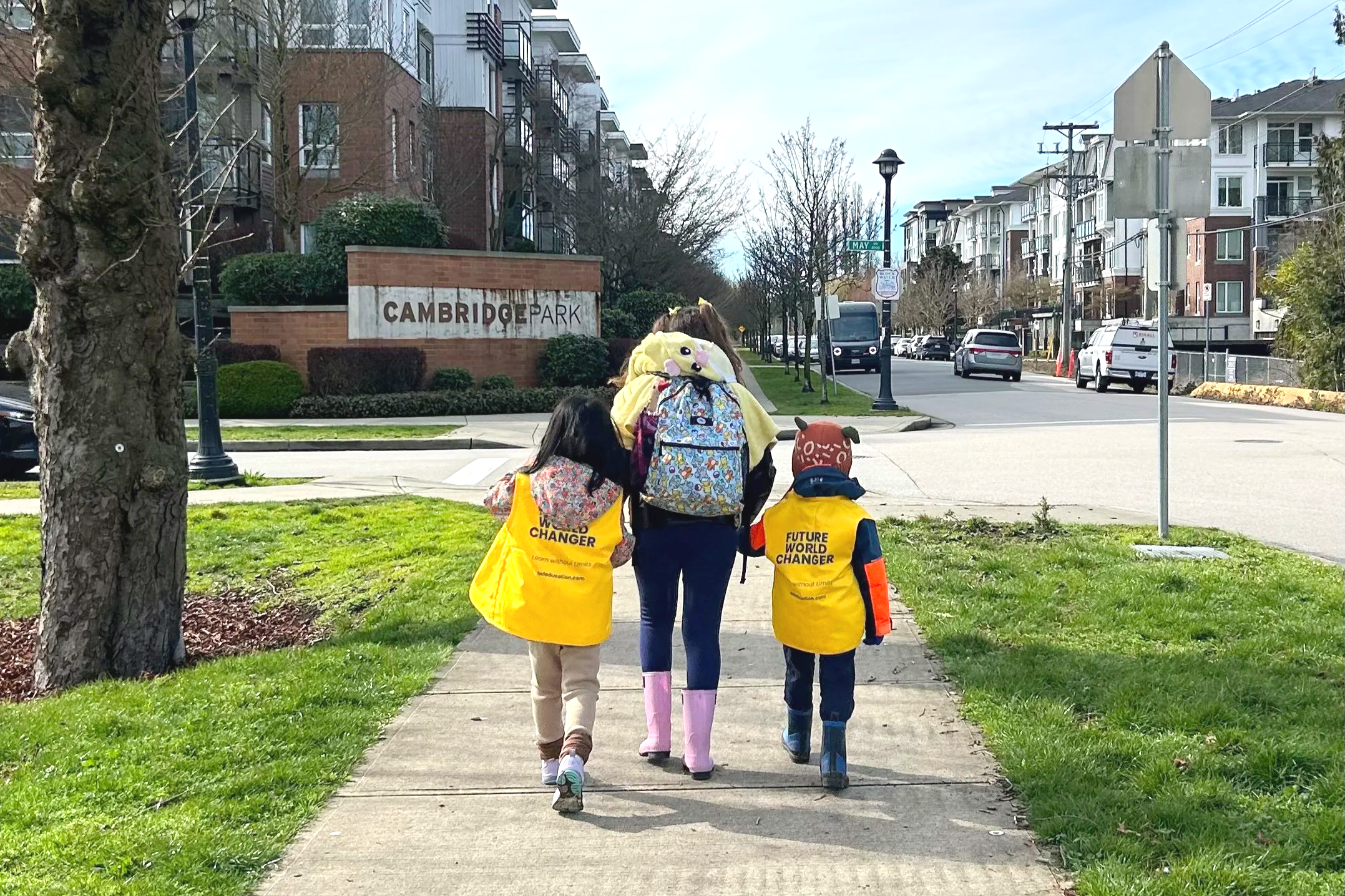
Safe and Reliable After School Pickup by LWL Education
If you're still exploring what truly matters beyond rankings, having the right learning environment outside school can make a meaningful difference.
If you’re looking for a structured and reliable after-school program, feel free to reach out to the LWL Education team to learn more.